Showing posts with label ingredients. Show all posts

Saturday, August 10, 2024

Mascarpone Cheese: A Creamy Delight with Rich Tradition and Global Appeal

Mascarpone cheese is a soft, creamy dairy product, prized for its rich texture and mild flavor. It is produced through a unique method of thermal-acidic coagulation of milk cream, where direct acidification plays a central role. The primary ingredients in mascarpone are high-fat milk cream, which contains 80% dry weight lipids and 2.8% to 6% protein, and acidifying agents such as acetic, citric, tartaric, or lactic acids, or simpler options like vinegar or lemon juice. These acids are added to heated cream, typically between 85 and 95°C, triggering the coagulation process.

During this process, the whey proteins denature due to the heat, causing them to bind with casein micelles and the fat globule membrane. This interaction partially retains the whey proteins within the cheese matrix, a crucial factor that contributes to mascarpone's distinctive texture and flavor. After coagulation, the cheese undergoes a draining period of about 20 hours, during which it acquires its signature consistency.

Historically, mascarpone originated in Northern Italy, where it was traditionally made by farmers for immediate consumption. Today, it has gained international recognition, not only as a key ingredient in desserts like tiramisu but also as a versatile component in savory dishes. The demand for mascarpone has expanded globally, driven by its growing popularity in various culinary applications, from creamy sauces to gourmet pastries. This evolution reflects both the adaptability of mascarpone and its enduring appeal as a staple of Italian cuisine.
Mascarpone Cheese: A Creamy Delight with Rich Tradition and Global Appeal

Saturday, January 8, 2022

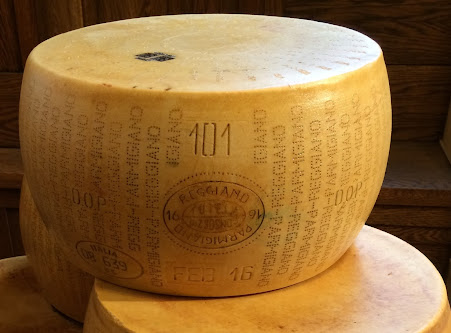
Parmigiano Reggiano cheese

Parmigiano Reggiano is a hard cheese, obtained from cooked and slowly matured paste, made from raw cow’s milk, partially skimmed, produced by cows whose feed consists mainly of forage from the area of origin. The milk may not undergo any heat treatments and the use of additives is not allowed.

More than 70 percent of Parmigiano-Reggiano production takes place on the fertile, highly productive plains. The remaining part is produced in the hills and mountain areas which are characterized by less favorable conditions.

The milk and the cheese are produced in Italy in the defined geographical area which comprises the provinces of Parma, Reggio Emilia, Modena, Mantua (on the right bank of the Po river) and Bologna (on the left bank of the Reno river), in compliance with strict standards. Ingredients: part-skimmed milk, salt, enzyme or part-skimmed milk, salt, rennet.

The cooking temperature plays a key role in the acidification process in the first hours after Parmigiano Reggiano cheesemaking. Furthermore, the temperature at the end of cooking has been shown to influence the moisture content of cheese and to affect the acidification curves in the inner zone of the cheese.

The ripening period involves a sequential breakdown of milk components, such as fat, protein and lactose, by the enzymes of bacteria. During the ripening period, lactic acid bacteria (LAB) contribute to cheese flavor development through several basic mechanisms that include carbohydrate fermentation, conversion of milk proteins into peptides and free amino acids, catabolism of amino acids into aroma compounds, hydrolysis of milk lipids into free fatty acids, and citrate catabolism.

The wheels weigh about 40-44 kg and they mature for a long time, at least 9-12 months, although usually 24 or more.
Parmigiano Reggiano cheese

The most popular posts