Showing posts with label cheese. Show all posts

Wednesday, November 19, 2025

Pecorino Romano: History, Flavor, and Nutritional Significance

Pecorino Romano is one of Italy’s most iconic hard cheeses and a leading member of the broader pecorino family—an ancient group of cheeses made exclusively from sheep’s milk. The term pecorino comes from pecora, the Italian word for “sheep.” While Pecorino Romano is the most widely recognized variety, others such as Pecorino Toscano and Pecorino Sardo also hold celebrated positions in regional Italian cuisine. Each type develops its own distinctive character depending on local traditions, milk composition, and aging techniques, resulting in cheeses that range from mild and buttery to intensely sharp and pungent.

Pecorino Romano stands out for its robust aroma and concentrated flavor. It delivers salty, smoky, spicy, and sharply savory notes that intensify with age. Traditionally produced from fresh, full-fat milk of Sarda sheep, the cheese is aged for a minimum of five months. Wheels aged longer than eight months deepen in complexity, becoming firmer, sharper, and more aromatic. Its naturally low moisture content prevents it from melting smoothly like softer cheeses, but this very firmness makes Pecorino Romano exceptional for grating over pasta, salads, soups, and roasted vegetables.

Because it is made from sheep’s milk, Pecorino Romano offers a different nutritional profile than cheeses made from cow’s milk. Sheep’s milk contains higher levels of calcium, certain vitamins, and beneficial fatty acids such as conjugated linoleic acid (CLA). Studies have linked CLA to reduced inflammation and potential protective effects against diabetes and certain cancers, making pecorino cheeses not only flavorful but also nutritionally distinctive.

The roots of Pecorino Romano stretch back more than two millennia. Latin writers such as Marcus Terentius Varro and Pliny the Elder documented methods that closely resemble those used today. Its durability and long shelf life made it a staple ration for Roman soldiers, who relied on the cheese for both sustenance and energy during military campaigns.

Today, Pecorino Romano holds Protected Designation of Origin (PDO) status. Under European Union regulations, it can be produced only in specific areas: the island of Sardinia, the Lazio region surrounding Rome, and the Tuscan province of Grosseto.

Compared with Parmesan, Pecorino Romano is saltier, sharper, and made from sheep’s rather than cow’s milk. Parmesan offers a milder, sweeter nuttiness, while pecorino delivers a more assertive, bold flavor ideal for dishes that benefit from extra punch.
Pecorino Romano: History, Flavor, and Nutritional Significance

Saturday, September 27, 2025

Pule: The World’s Rarest and Most Expensive Cheese

Pule is a rare and luxurious cheese from Serbia, renowned for being the most expensive cheese in the world. It is crafted from a unique blend of 60% Balkan donkey milk and 40% goat milk, giving it a soft, crumbly texture and a flavor that is nutty, slightly sweet, and often compared to manchego. This artisanal cheese is produced exclusively at the Zasavica Special Nature Reserve, a protected area dedicated to preserving biodiversity, including the endangered Balkan donkey.

What makes Pule so extraordinary is the rarity of its key ingredient—donkey milk. Unlike cows, which can yield up to 60 liters of milk a day, a female donkey, or jenny, produces only 1.5 to 2 liters daily, and not consistently throughout the year. To make just one kilogram of Pule cheese, about 25 liters of donkey milk are needed. This scarcity explains its staggering price of around US$1,300 per kilogram, making it more valuable than many luxury delicacies.

Currently, about 180 Balkan donkeys live at the Zasavica reserve, where they are hand-milked three times a day. Beyond its rarity, donkey milk is known for its nutritional qualities. It is rich in vitamins, minerals, and immune-boosting compounds, and has historically been valued for medicinal purposes. Cleopatra, for example, was said to bathe in donkey milk to maintain her skin’s softness.

While Pule is not widely available outside Serbia, it has attracted global attention from gourmet chefs and culinary enthusiasts. Its exclusivity, tied to the preservation of an endangered species and the labor-intensive production process, makes it both a culinary treasure and a symbol of artisanal craftsmanship. For those fortunate enough to taste it, Pule offers a once-in-a-lifetime experience that blends history, rarity, and flavor into one remarkable bite.
Pule: The World’s Rarest and Most Expensive Cheese

Tuesday, September 17, 2024

Canestrato Pugliese: A Tradition of Artisanal Cheese from Puglia

Canestrato Pugliese is a distinguished cheese from the Puglia region in southern Italy, renowned for its rich history, unique production process, and deep connection to the region’s pastoral traditions. This hard cheese is made exclusively from the milk of sheep that graze on the lush, herbaceous pastures of the Alta Murgia plateau, a landscape that contributes to the distinct character of the cheese. The area is home to a variety of native plants, which impart their aromatic qualities to the sheep’s milk, resulting in a complex and nuanced flavor. The cheese is a testament to the unique relationship between the land, animals, and artisanal craftsmanship of Puglia.

The name “Canestrato” derives from the traditional reed baskets, or “canestre,” used during the aging process. These baskets leave a characteristic imprint on the cheese’s rind, giving it a rustic, textured appearance. The use of these baskets is more than a practical measure; it ties the production process to ancient methods of cheese-making that have been passed down through generations. This artisanal technique ensures that each wheel of Canestrato Pugliese maintains its authenticity and heritage, preserving the flavor and texture that have made the cheese so revered.

The production of Canestrato Pugliese is seasonal, typically occurring between December and May, when the sheep’s milk is at its richest and most flavorful. The cheese undergoes partial cooking during the early stages of production and is then aged for different lengths of time, producing two primary varieties: “fresco” and “stagionato.” The fresh version, “fresco,” has a mild, creamy taste with a softer texture, while the “stagionato” version, aged for longer periods, boasts a more intense, tangy flavor and a firm, crumbly texture. This aging process enhances the cheese’s savory notes and makes it a versatile ingredient in many regional dishes.

Canestrato Pugliese holds the prestigious Denominazione di Origine Protetta (DOP) status, which guarantees its origin and quality. This designation protects the cheese from imitation, ensuring that only products made according to strict traditional methods within the defined geographic area can bear the name. Despite its limited production, Canestrato Pugliese is a cherished culinary gem in Italy, often grated over pasta dishes or enjoyed on its own. Its distinct taste and rich cultural heritage make it a symbol of Puglia’s agricultural excellence.
Canestrato Pugliese: A Tradition of Artisanal Cheese from Puglia

Saturday, October 14, 2023

History of mascarpone cheese

Mascarpone is a triple-creme cheese made from fresh cream. Traditionally, this was made from the fresh milk of cows that have grazing pastures filled with fresh herbs and flowers. Mascarpone originated during the Middle Ages in Lombardy. Lombardy, in the northern part of Italy includes the cities of Brescia, Cremona, Mantova, Milano and Sondrio, and it has a rich agricultural and dairy heritage.

In the 1500s and 1600s, dairymen in the region became famous for selling fresh cheese curds, known as mascarpone. The name Mascarpone may have originated from the word “mascarpa” which is milk made from the whey of stracchino cheese, or from the word “mascarpia”, the local Italian word for ricotta.

Mascarpone is an ingredient in tiramisu. Tiramisu is the most classic dessert when people think of mascarpone cheese. It's a rich coffee-soaked cake with mascarpone cream and cocoa powder on top.

The word tiramisu literally means “pick me up”. It comes from the Treviso dialect, “Tireme su”, Italianized into tiramisu in the latter half of the 20th century. Historical records state that tiramisu originated in Treviso in 1800. It is said that this dessert was invented by a clever “maitresse” of a house of pleasure in the center of Treviso.
History of mascarpone cheese

Saturday, January 8, 2022

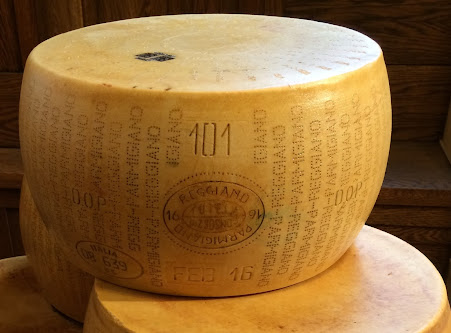
Parmigiano Reggiano cheese

Parmigiano Reggiano is a hard cheese, obtained from cooked and slowly matured paste, made from raw cow’s milk, partially skimmed, produced by cows whose feed consists mainly of forage from the area of origin. The milk may not undergo any heat treatments and the use of additives is not allowed.

More than 70 percent of Parmigiano-Reggiano production takes place on the fertile, highly productive plains. The remaining part is produced in the hills and mountain areas which are characterized by less favorable conditions.

The milk and the cheese are produced in Italy in the defined geographical area which comprises the provinces of Parma, Reggio Emilia, Modena, Mantua (on the right bank of the Po river) and Bologna (on the left bank of the Reno river), in compliance with strict standards. Ingredients: part-skimmed milk, salt, enzyme or part-skimmed milk, salt, rennet.

The cooking temperature plays a key role in the acidification process in the first hours after Parmigiano Reggiano cheesemaking. Furthermore, the temperature at the end of cooking has been shown to influence the moisture content of cheese and to affect the acidification curves in the inner zone of the cheese.

The ripening period involves a sequential breakdown of milk components, such as fat, protein and lactose, by the enzymes of bacteria. During the ripening period, lactic acid bacteria (LAB) contribute to cheese flavor development through several basic mechanisms that include carbohydrate fermentation, conversion of milk proteins into peptides and free amino acids, catabolism of amino acids into aroma compounds, hydrolysis of milk lipids into free fatty acids, and citrate catabolism.

The wheels weigh about 40-44 kg and they mature for a long time, at least 9-12 months, although usually 24 or more.
Parmigiano Reggiano cheese

Friday, November 12, 2021

Mascarpone cheese

Mascarpone is a cheese originally from Italy, but it is currently produced in other parts of the world, usually from bovine milk. Around the late 1500s or late 1600s dairymen of Lombardy became famous for their fresh cheese curds known as Mascarpone (Jones).

It is believed that the name “mascarpone” may come from the Spanish “mas que bueno” (“better than good”), from the days when the Spanish ruled Italy. Another possibility is that the name is derived from “mascarpia,” the local dialect term for ricotta, because very similar processes make both ricotta and mascarpone.

It is an unripened fresh cheese, used for consumption shortly after its production with a delicate, soft, dense, creamy and smooth appearance and color that varies from snow white to light yellow.

Fat content is quite high varying from 44% to 47% and it may contain over 80% of fat in the dry extract.

This type of cheese produced by a combination of chemical acidification and heat treatment. It does not need a starter culture, as the majority of other cheeses that require a mesophilic culture.

Due to the mild flavor and creamy consistency, it is a base ingredient in industrial, culinary, and homemade preparations (e.g., it is a key constituent of a widely appreciated Italian dessert ‘Tiramisù’). Mascarpone is also used in other dished such as pasta, and fresh fruit.
Mascarpone cheese

Thursday, August 26, 2021

Gruyere cheese

Gruyere, hard cow's-milk cheese is a cheese from the French speaking region of Switzerland having been produced since at least 1115 in the region surrounding the Swiss town of Gruyère. It is still made today in village cheese factories according to the traditional recipe.

Gruyere cheese is classified as aged cheese. Aged or mature cheeses are firmer in texture and tend to be aged for 6 months or longer. The longer the aging process, the more concentrated or sharp the flavor.

Gruyere is formed in large wheels of 70 to 80 pounds (32 to 36 kg) with a brownish, wrinkled natural rind. It contains small holes or eyes. It has a mild flavor, due in part to the growth of surface-curing agents.

This cheese is known for its rich, creamy, salty, and nutty flavor. The minimum milkfat content is 45 percent by weight of the solids and the maximum moisture content is 39 percent by weight.
Gruyere cheese

Thursday, August 5, 2021

Cheese processing: A milk curdling activity

In cheese manufacturing, milk is poured into big vats and a “starter culture” of bacteria is added to convert the lactose into lactic acid. Then an enzyme called rennet is added to curdle the milk

Curdling milk is the first step to separating the solids (fat and some protein), from the liquid (whey protein and water). There are two ways to curdle milk, either with acids, like lemon juice or vinegar or with an enzyme such as rennet.

The whey is removed, salt is added, and the curds are cut into smaller pieces and heated to release more whey. The additional whey is drained off, which leaves clumps of casein. Those clumps are pressed into molds and left to age (dry) for various periods of time.

During manufacturing of ricotta cheese, queso fresco, or Indian paneer, acid is used to curdle milk with the present of heat. Rennet contains enzymes that catalyze the degradation of casein proteins in milk. About 80 % of protein in milk is casein, the rest is whey proteins.

Curds that are formed with rennet have a gel-like consistency, allowing them to be stretched and molded unlike curds formed with acid. Cheeses with good melting qualities, such as mozzarella, are produced with rennet.

The lactic acid formed from the fermentation of the milk sugar caused the clotting of the major milk protein, casein. Casein micelles are the components from which cheese is made. The casein micelles determine the stability of milk products during heating, concentration and holding.

Caseins and whey proteins are major components of milk proteins which affect the cheese making process. Cheese yield quality, curd firmness, syneresis rate and moisture retention are affected by the casein portion of milk. Milk with a low casein content (2.27%), gave lower cheese yield per 100 kg milk (7.38 kg) than milk which was richer in casein (2.48%, yield 7.94 kg).
Cheese processing: A milk curdling activity 

Tuesday, August 4, 2020

Natural Rind cheese

The cheese rind’s characteristics help to define the type of cheese and largely determine its flavor. Furthermore, cheese rind constitutes a man-made ecosystem that has resulted from the selection and establishment of functional microbial communities.

It is during the ripening stage that the rind or crust forms on the cheese's surface. The rind controls the loss of moisture from the internal part of the cheese and regulates the escape of gases released during ripening.

Many ripened cheeses are coated in wax to protect them from mold contamination and to reduce the rate of moisture loss. Cheeses that naturally develop a thick, tightly woven rind, such as Swiss, do not require waxing.

Cheese can be classified to:
➢ Fresh Cheese
➢ Bloomy Rind Cheese
➢ Natural Rind Cheese
➢ Washed Rind Cheese
➢ Blue Cheese

A cheese rind that forms naturally when the outside of the cheese hardens from contact with air during the cheesemaking process.

Natural rinds tend to be thicker and harder, and sometimes gritty. Examples of natural rinds: Stilton, Montgomery Cheddar, Tomme de Savoie, Cantal, Parmigiano Reggiano, and Tumalo Tomme.
Natural Rind cheese

Wednesday, June 17, 2020

Brie cheese

Among the specialty cheese receiving high consumer interest are the mold surface-ripened cheese, Brie and Camembert. Both Brie and Camembert cheese are currently manufactured with Penicillium caseicolum.

Brie is a soft surface ripened, primarily white mould ripened cheese in conformity with the General Standard for Cheese, which has a shape of a flat cylinder or sectors thereof.

The body has a near white through to light yellow colour and a soft-textured (when thumbs-pressed), but not crumbly texture, ripened from the surface to the center of the cheese. Gas holes are generally absent, but few openings and splits are acceptable.

Because fungal growth and activity occurs primarily near the surface, brie had distinct inner cores and external rinds. For Brie ready for consumption, the ripening procedure to develop flavour and body characteristics is normally from 10 days at 10–16 °C depending on the extent of maturity required.

Brie also had a slightly nutty and a cooked milk note that was found in only two other cheeses. Brie was more bitter and more pungent than most cheeses. It exhibited very slight animalic and goaty attributes, as well, and was in the group of cheeses with low scores for attributes such as sour, salty, and sharp.

The specific terms “Brie de Meaux”, and "Brie de Melun" are controlled French designation of origination ("Appellation d'origine contrôlée") that indicate both the place of production and the specific process used.
Brie cheese

Tuesday, November 26, 2019

Washed Rind cheese

Cheeses with a rind or crust, washed in salted brine, whey, beer, wine, other alcohol, or grape lees that exhibit an obvious smeared or sticky rind or crust: Liederkranz, Limburger, brick types and styles, Pont l’Évêque, Chimay, etc.

Rind is the external surface of the cheese. It can consist of moulds or bacteria (in the case of white mould and washed rind cheeses).

Like white mould cheeses, these styles are also known as ‘surface ripened’. Washed rind cheeses are among the world’s strongest smelling, but many have a surprisingly mild flavour.

The wash attracts bacteria that produce an orange rind and causes a strong taste and odor known to many “stinky cheeses.” Washed rind cheese with a high moisture content gets broken down by these bacteria, resulting in a creamy cheese that becomes oozier with age.

They have a robust aroma reminiscent of cured meats (or smelly socks!) and a very savoury flavour with a hint of sweetness.

The cheese surface is washed during maturation with a brine solution containing a bacterium, Brevibacterium linens (also known as Brevior B. linens). This gives the rind its distinctive aroma and red/orange colour.
Washed Rind cheese

Wednesday, October 9, 2019

The taste of cheese

Cheese is the generic name for a group of fermented milk-based food products. Over 2,000 natural cheeses have been named and identified, including "original" cheeses, as well as "imitations" of originals.

In cheese, the yeast seems to take part in several microbial interactions important for the fermentation and maturation process of several cheeses.

Dairy-related attributes (dairy fat, dairy sour, and dairy sweet), fundamental tastes (bitter, salty, sour, and sweet), and sharp and astringent were found in every type of cheese.

The volatile flavor compounds in cheese originate from degradation of the major milk constituents; namely lactose, citrate, milk-lipids, and milk proteins (collectively called caseins) during ripening which, depending on the variety, can be a few weeks to more than 2 years long.

The breakdown of protein is important for cheese taste, and some off-flavors, for example, bitterness, but are unlikely to contribute much to aroma. The breakdown of protein also softens the cheese texture by breaking down the casein network. Compounds arising from the catabolism of free amino acids contribute directly to cheese taste and aroma.

Bitterness, origination from nitrogen containing compounds, especially small peptides, is one factor that can limit the acceptability of cheese. NaCl is responsible for the salty taste, and other salts often contribute to the bitter taste.

Chevre had the highest goaty flavor and was rated among the highest for dairy sour flavor, sour taste, and astringency. Chevre had very low dairy flavor notes.

Gruyere could be considered a sweet cheese; it was higher than most cheeses in both sweet taste and dairy sweet, and was low in bitterness.
The taste of cheese

Saturday, October 5, 2019

Cheesemaking: aging process

In its final stage of production, cheese is set out in a controlled environment to age The cheese is stored in a place of proper temperature and humidity for aging also known as ripening. Some cheeses are aged for a month and some are aged for several years. The length of the aging period in the plant was determined by expert elicitation.

Cheesemakers manage its temperature, humidity, and bacteria population. During the aging process, the starter bacteria again become active as they break the casein protein and milkfat into fatty acids, amines, and amino acids.

The degree of protein decomposition significantly affects the quality (consistency and taste) of the cheese. It is during this process that Swiss cheese gains its signature holey appearance, as its bacteria produce carbon dioxide gas bubbles.

Biochemical changes in cheese during aging may be grouped into primary (lipolysis, proteolysis and metabolism of residual lactose and of lactate and citrate) or secondary (metabolism of fatty acids and of amino acids) events. Residual lactose is metabolized rapidly to lactate during the early stages of aging.

Additional bacteria are often introduced (either applied directly to the cheese or made present in the air) to further manipulate the cheeseʼs final taste and consistency.
Cheesemaking: aging process

Monday, May 27, 2019

Listeria in cheese

Microorganisms of the genus Listeria are widely distributed in nature, although with a limited number of species of medical and veterinary significance.

Listeria monocytogenes is an important human pathogen that can cause serious illnesses, with high mortality rates in susceptible individuals such as the elderly and people with immuno-compromised conditions.

It is a bacterium that is common in the environment and can be found in agricultural and food-processing settings, where it tends to persist once established. It might affect only the gastrointestinal tract, but may invade other parts of the body, potentially causing septicemia, meningitis, encephalitis, spontaneous abortion, and stillbirth.

Consumption of contaminated dairy products has been associated with cases and outbreaks of human listeriosis. Dairy products are good substrate for L. monocytogenes growth, as they contain proteins, lactose and trace elements. Outbreaks have been strongly associated with cheese consumption.

Fresh cheeses, which have been linked to human listeriosis outbreaks in the United States, are considered high-risk foods for L. monocytogenes contamination. Fresh cheeses are usually protected from contamination by refrigeration and usually packed with paper or shrink-wrapped with polyethylene or polypropylene with potential risk of proliferation of aerobic mesophilic bacteria, coliforms, molds or yeast.

Although L. monocytogenes is effectively inactivated by pasteurization, the prevention of post-processing contamination of milk products is of particular importance to dairy industries.
Listeria in cheese

Tuesday, March 20, 2018

Blue mold cheese

Blue cheese is a type of cheese characterized by visible blue-green veins of mold throughout the interior cheese and by a sharp, piquant flavor.

The typical appearance of the blue mold cheese varieties is due to the growth and development of the mold Penicillium roqueforti.

Cheeses in this family include Roquefort, which is made only in the Roquefort area of France from sheep’s milk, and its cow’s milk counterpart, blue in the United States, Stilton in England, and Gorgonzola in Italy.

The earliest makers of blue cheese used bread to begin production of the distinctive mold and then wait patiently for the veins of mold to grow and spread naturally between the curds. On later times mold growth is often induced with Penicillium spores.

These cheeses are aged in places where the mold is allowed to grow on the cheeses rounds or blocks so that it can give the cheese its flavor naturally.

A good blue is always flavorful but is never sour or harsh. The older the cheese, the more pungent is the flavor and the more dense the veining.
Blue mold cheese 
Note: blue mold cheeses also called blue-veined cheeses or simply blue cheeses.

Wednesday, December 27, 2017

Why is it called hard cheese?

Natural hard cheeses get their taste, texture, and physical properties from high butterfat content, where the largest amount of fat and calories are contained.

A hard cheese, such as Cheddar, consists of roughly one-quarter protein, one-third fat and one-third water.

Hard cheeses are largely free of additives. Processed cheese on the other hand, contains a variety of additives such as dried milk powder emulsifiers and flavors.

As researchers have worked to reduce the butterfat content in hard cheese analogs, a decrease in flavor and in melting properties has also occurred. Lack of flavor is sometimes offset by adding herbs, peppers or smoke flavoring.

Natural hard cheese can be stored for extended periods but quality eventually deteriorates as the proteolytic and lipolytic activities in the curd become excessive. Storage life can be improved by processing. Decomposition of proteins and lipids results in a nutritionally defective product unsuitable for consumption.
Why is it called hard cheese?

Tuesday, November 28, 2017

Emmental cheese

The original Emmental cheese in Switzerland must be manufactured from raw milk. Emmental is probably the best-known Swiss-type cheese and is frequently referred to simply as ‘Swiss cheese’ in the United States, Cana, Australia and New Zealand.

Emmental cheese is a ripened hard cheese, usually manufactured as wheels and blocks of weights from 40 kg or more adapted to various use conditions.

Emmental cheese is ripened initially for 2-3 weeks at a low temperature (~12 °C), after which the temperature is increase to 20-24 °C weeks to promote the growth of propionic acid bacteria and the fermentation of lactate to propionate and acetate; the temperature is then reduce to ~4 °C.

The characteristics of Swiss Emmental are:
*Cylindrical shape
*Firm dry rind
*Weight 60-13 kg
*1000-2000 round eyes per loaf of diameter 1-6 cm, use by propionic fermentation
*Flavour – mild, slightly sweet, becoming more aromatic with increasing age
*Cheese body – ivory to light yellow, slightly elastic
Emmental cheese

Thursday, August 10, 2017

Camembert cheese

Camembert is a mould surface-ripened soft cheese that has a relatively homogenous white color due to the growth of a fungus, Penicillium camemberti, which entirely covers the cheese surface and contributes to its typical taste and aroma.

A Frenchwoman named Marie Harel is credited with inventing the gourmet cheese named for her native village of Camembert.

This white-molded soft cheese variety is of particular interest for the cheese industry since ripening takes only 1 to 2 weeks, it can be produced in a variety of fat contents (about 2% to 65% fat in dry matter) and due to the relatively low dry matter content of soft cheese.
For a long time, Camembert cheese was only produced in the Normandy region according to a traditional cheese-making process. This traditional process is mainly characterized by the use of whole raw cow's milk, by the absence of microbial inoculation of the milk and by the manual, cottage-type techniques used.

Inside the rind, the cheese is softened progressively from the rind toward the center from all sides, so that a fully ripe cheese has no hard sour curd in the center, but is completely softened.

No mold should be visible inside the rind, but the moldy rind itself is necessary because the ripening is caused by the enzymes secreted by the organisms of the rind onto the cheese.
Camembert cheese

Wednesday, July 5, 2017

Soft curd farmer cheese

True farmer cheese is a soft fresh curd cheese that is firm enough to slice; it has a mild, tangy flavor. This soft, spreadable white cheese makes a good low fat substitute for cream cheese. Brands made with skim milk have about 3 grams of fat ounce compared with cream cheese’s 10 grams.
Soft curd farmer cheese may be used in dips, spreads, cheesecakes, frostings, fillings and many other recipes. Some brands are made with whole milk. Farmer cheese is a form of cottage cheese that was developed in America. Cottage cheese has origins in central and Eastern Europe and as with many cheeses, was brought to America by immigrants.

This cheese went by the name “New York cheese” or “country-style cottage cheese” and then became more widely known as a farmer cheese. Farmer cheese can be found in specialty cheese departments. It can be eaten within a week of being freshly pressed or dried to a crumbly texture and stored for a month or more.
Soft curd farmer cheese

Tuesday, June 6, 2017

Yogurt cheese

Yogurt drained so that the whey is removed – can be an excellent substitute for high-fat cheeses, sandwich spreads, dips and desserts.

Yogurt cheese has a mild flavor and texture somewhere between sour cream and cream cheese. Yogurt cheese is low in cholesterol, sodium, calories, and lactose, but it’s high in calcium and packs more nutrients than plain yogurt because the whey has been removed.
What makes yogurt cheese special is that it picks up the flavor of anything it’s mixed with. Plain or whisked with a little honey, versatile yogurt cheese is a dessert dip for fresh cherries, strawberries or slices of peach, mango or melon
Yogurt cheese

The most popular posts