Showing posts with label goat’s milk. Show all posts

Wednesday, December 21, 2022

Nutritional and health attributes of goat milk

Goat milk differs from cow and human milk in having better digestibility, buffer capacity, alkalinity and therapeutic values.

In gross characterization of milk fat, goat milk contains 97-99% of free lipids and 1-3% bound lipids of total fat.

One of the most important contributions of goat milk to human nutrition is the calcium and phosphate that it supplies. Goat milk contains about 1.2 g calcium and 1 g phosphate per liter; these concentrations are similar to those in cow milk.

Fat is up to 99 % glycerides and steroids. Free lipids of goat milk contained 96.8% triglycerides, 2.2% diglycerides and o.9% monoglyceride, whereas bound lipids contained 46.8% neutral lipids and 53.2% polar lipids.

Fat globules are smaller and probably one of the reasons for easy digestion of this milk. The average diameter of globules in goat‟s milk is about 1.5-2 µm compared to 2.5-3.5 µm for cow‟s milk and the percentage of globules of less than 1.5µm is 28% for goat‟s milk verses 10% for cow‟s milk. These smaller sized fat globules provide a better dispersion, and a more homogeneous mixture of fat in the milk.

Goat milk contains slightly less total casein but higher non-protein nitrogen than the cow counterpart. Milk from goats is also high in vitamin A and niacin.

Lactose is the major carbohydrate in goat milk and the content is slightly lower than in cow milk. Other carbohydrates found in goat milk are oligosaccharides, glycopeptides, glycoproteins and nucleotides in small amounts.

Goat milk taste varies a great deal by bred, by feed stuffs, by stage of lactation, by the age of the milk and especially by the way it’s handled.

Goat milk is more complex in flavor than cow’s milk. and is gaining popularity in the United States for those with allergies to cow’s milk and for those who choose to avoid cattle byproducts.
Nutritional and health attributes of goat milk

Wednesday, January 4, 2017

Goat’s milk

Although dairy cows produce the grates amount of world milk supply mostly from developed countries, more people drink the milk of goals than milk of any other single species on a worldwide basis.

Most of the world’s goat population is kept for the production of meat and milk. Some breeds, such as the Sannen, the Angola-Nubian and the alpine breeds, have been selected for high levels of milk production, and yields of more than 1000 kg per year are not uncommon.

With proper milking and handling practices, milk can be a highly nutrition food. It is especially valuable for growing children.

The release of milk by a goat is an involuntarily reflex in response to a set of external stimuli. These stimuli include the presence of the kid and the action of suckling by the kid. The milk must be safe to consume free of pathogenic bacteria, antibiotic, insecticide and herbicide compounds.

One of the most important contributions of goat milk to human nutrition is the calcium and phosphate that it supplies. Goat milk contains about 1.2 g calcium and 1 g phosphate per liter; these concentrations are similar to those in cow milk.

All milk for human consumption must be pasteurized. Milk can transmit the following health problems to people: brucellosis, tuberculosis and diarrhea and abdominal pains.

A variety of products may be manufactured from goat milk, including fluids products (low fat, fortified, or flavored), fermented products such as cheese, butter milk or yoghurt, frozen products such as ice cream or frozen yoghurt or butter, condensed and dried products.
Goat’s milk 

Wednesday, December 14, 2016

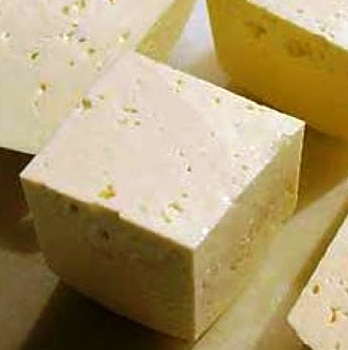
Feta cheese

This type of cheese is very popular to make from goat’s milk. Feta cheese is aged in a brine solution after the cubes have been salted in a brine solution for at least 24 hours.

Soft goat cheeses such as feta cheeses - a salty, white cheese originating in Greece which can be made with goat or sheep; milk – contain more moisture and are comparable to cheese made from part-skim cow’s milk.

Feta texture is creamy or crumbly dry, varying according to age, local environment, animal breeds and starter cultures. Feta is a protected designation of origin cheese and may be the most famous Greek cheese occupying more or less 70% of the Greek cheese armlet.

One and one-half ounces of feta cheese has 9 grams of fat, about the same amount as in an equal amount of mozzarella or Neufchatel cheese.
Feta cheese

Monday, July 7, 2014

Goat’s milk health benefits

Goat milk is naturally homogenous and can be digested more easily than cow’s milk. Goat milk has many health benefits. It is high calcium, phosphorus, potassium, iron, copper, magnesium and antioxidant activity.

It is a complete protein, containing all the essential amino acids and without the heavy fat content of cow milk.

Goat’s milk is less allergenic. It does not contain the complex proteins that stimulate allergic reaction to cow’s milk.

When fed to other animal species, goat milk has been shown to enhance metabolism of both iron and copper, especially for individuals who have problems absorbing minerals in the digestive tract because of compromised intestinal function. The milk alkalinizes the digestive system. It actually contains an alkaline ash, and it does not produce acid in the intestinal system.

Goat’s milk contains twice the healthful medium chain fatty acids, such as capric and caprylic acids which are highly antimicrobial.

People who are lactose intolerant often revert to goat’s milk and have no problems thereafter with digestive system.
Goat’s milk health benefits

Saturday, July 7, 2012

Minerals in goat’s milk

Goat milk contains higher calcium, phosphorus, potassium, magnesium, and chlorine and lower sodium and sulfur contents than cow milk.

Although the fluctuation of macro-mineral contents may not be considerable in goat milk, their levels can vary, depending on the breed, diet, animal and stage of location.

Goat milk has a reputation of being a highly digestible dairy product even more digestible than cowls milk and less allergenic as well.

When compared with cow’s milk, goat’s milk has a lower iron. However, goat milk contains 13% more calcium, 134% more potassium, and 27% more selenium compared with cow’s milk. It is also four times higher in copper.

Goat milk contains about 134 mg Calcium and 121 mg Phosphorus / 100g. Human milk contains only one-fourth to one-sixth of these minerals.

Phosphorus exerts several important bioactive metabolic functions in the body, including bone mineralization, energy metabolism, fat and carbohydrate metabolism, body buffer system and formation and transport of nucleic acids and phospholipids across cell membranes for body cell functioning, etc.

Goat’s milk is one do the best fluorine sources, nearly ten times higher than cow’s milk. Dietary fluorine helps built immunity, protect teeth and strengthen bones.
Minerals in goat’s milk

Saturday, January 7, 2012

Vitamins content in goat’s milk

Goat milk supplies adequate amounts of vitamin A and niacin, and excesses of thiamin, riboflavin and panthothenate for human.

Vitamin A functions at two levels in the human body: the first is in the visual cycle in the retina of the eye; second is in all body tissue where it systemically maintains the growth and soundness of cells.

While for niacin, it functions in many metabolic pathways, especially anaerobic, Krebs cycle-oxidative phosphorylation and fatty acids synthesis and oxidation.

Goat milk has higher amounts of vitamin A than cow milk. Milk from goat also higher in niacin but does not have the same amount of vitamin B6, B12 and C as cow’s milk.

Goat milk has a reputation of being a highly digestible dairy product even more digestible than cowls milk and less allergenic as well.

Goats milk contains 47% more vitamin A, 25% more vitamin B6 and three percent more niacin compared with cow’s milk.
Vitamins content in goat’s milk

Tuesday, June 14, 2011

Goat’s Milk

This milk may be the milk of choice for children who are allergic to cow’s milk. The difference in the proteins mean the goat’s milk does not cause an allergic response.

The chemical composition of goat milk varies with breed and other factors, but goat milk contains approximately 11.0-13.0% total solids, 3.0-5.5% fat, 2.9-4.6% protein, 3.8-5.1% lactose and 0.69-0.81% ash.

Even though goat’s and cow’s milk have some similar nutritional features, goat’s milk differs in many basic qualities including taste, mineral content, and chemistry in general.

Smaller fat molecules and shorter fatty acid chains result in milk that is easier to digest and can even tolerated by some people who are lactose intolerant as well as others who are allergic to regular cow’s milk.

Goat’s milk is one of the best fluorine sources, nearly ten times higher than cow’s milk. Dietary fluorine helps build immunity, protect teeth, and strengthen bone.
Goat’s Milk

The most popular posts